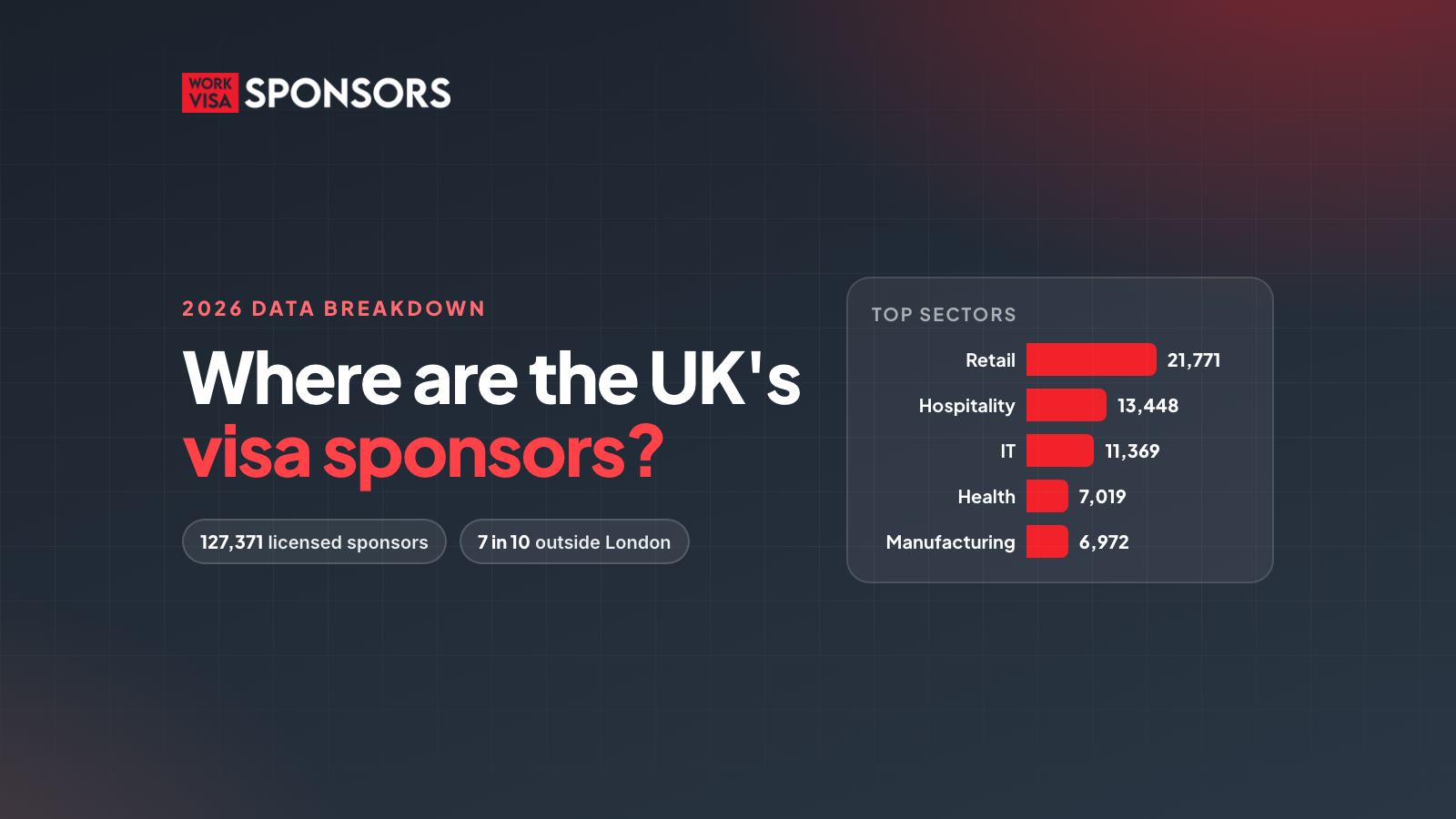
Where Are the UK's Visa Sponsors? A 2026 Breakdown by Sector and City
We analysed all 127,371 organisations licensed to sponsor UK work visas. Retail has almost twice as many sponsors as IT, 7 in 10 sponsors are outside…
Read article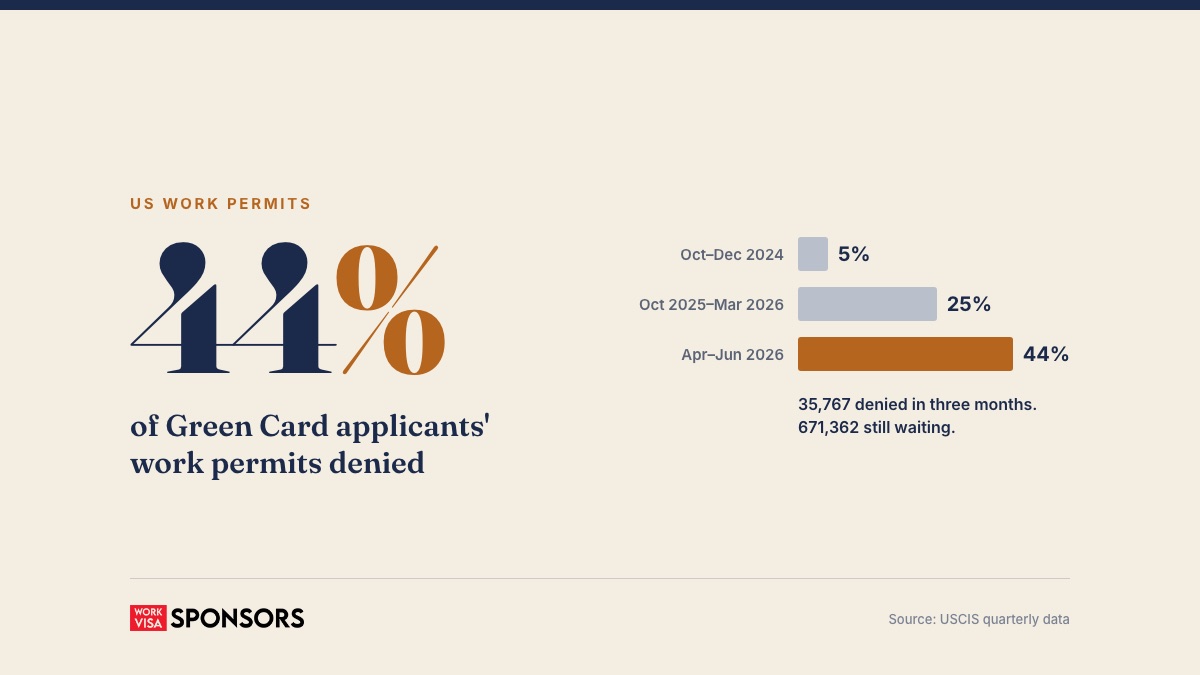
The United States denied 35,767 work permit applications from Green Card applicants between April and June 2026. That is about 44% of all the decisions it made in that category, up from about 5% a year and a half earlier.
If you are an international professional deciding where to build your career, this matters. Here is what the numbers say, why they are rising, and how the UK's sponsored work route compares.
When someone applies for a US Green Card from inside the country, the process is called adjustment of status. It can take many months. While they wait, most applicants also apply for an Employment Authorization Document (EAD), the US work permit, on Form I-765. Without it, many cannot legally work until the Green Card is decided.
These figures cover that work permit only. They are not Green Card refusals. But the two are linked: if the Green Card application is refused, the work permit that depends on it usually fails too.
USCIS has not given a single reason, and part of the rise comes from fewer approvals rather than only more refusals. But several things are happening at once.
Denials are up across other US forms too. In the same quarter, citizenship refusals rose to about 19%, from about 13% in the previous six months.
A denial rate here means denials as a share of decisions made in the quarter. It does not mean 44% of everyone who applied was refused, because hundreds of thousands of cases are still pending.
The US is not closed. But a longer, less predictable route to working legally changes the maths for many people, especially those relying on a spouse's or their own pending Green Card to keep earning.
The UK's Skilled Worker route works differently:
The UK route is not easy either. Since 22 July 2025, most new Skilled Worker jobs must be at graduate level (RQF level 6 or above) and pay at least £41,700 a year, or the going rate for the job if higher. Some lower-skilled roles are allowed only through the Temporary Shortage List, and the overseas care worker route is closed to new applicants. The hardest part for most people is finding an employer that can sponsor them.
Do not abandon a pending case because of headlines. Respond to every request for evidence in full and on time, attend every biometrics and interview appointment, and keep copies of everything. If you receive a denial or a notice of intent to deny, speak to a qualified US immigration attorney quickly, as deadlines are short.
Search all licensed UK sponsors by name, sector or city, and browse sponsored job listings, free at workvisasponsors.co.uk.
About the data: US figures are from USCIS quarterly data for the third quarter of fiscal year 2026 (April to June 2026), as reported by Nairametrics on 13 October 2026, with earlier quarters from USCIS service-wide data summarised by Immiva. The denial rate is denials divided by approvals plus denials in the quarter. UK rules are from GOV.UK and can change. This article is general information, not legal advice.
We analysed all 127,371 organisations licensed to sponsor UK work visas. Retail has almost twice as many sponsors as IT, 7 in 10 sponsors are outside…
Read articleThe Australian skilled Migrant Visa is a unique visa intended to attract the brightest individuals who can make significant contributions to…
Read articleOne significant challenge immigrants face in seeking jobs in foreign countries is matching their qualifications with the new resident country. This…
Read article
